Medical Triage · 1.0
Fibrillation & Defibrillator Guide — Stabilize Heart Rhythm
Ventricular fibrillation and cardiac crises in Casualties: Unknown: reading the ECG, using defibrillators, Oxyline, and Combat pen risks on the vitals monitor.
What is ventricular fibrillation in Casualties: Unknown?
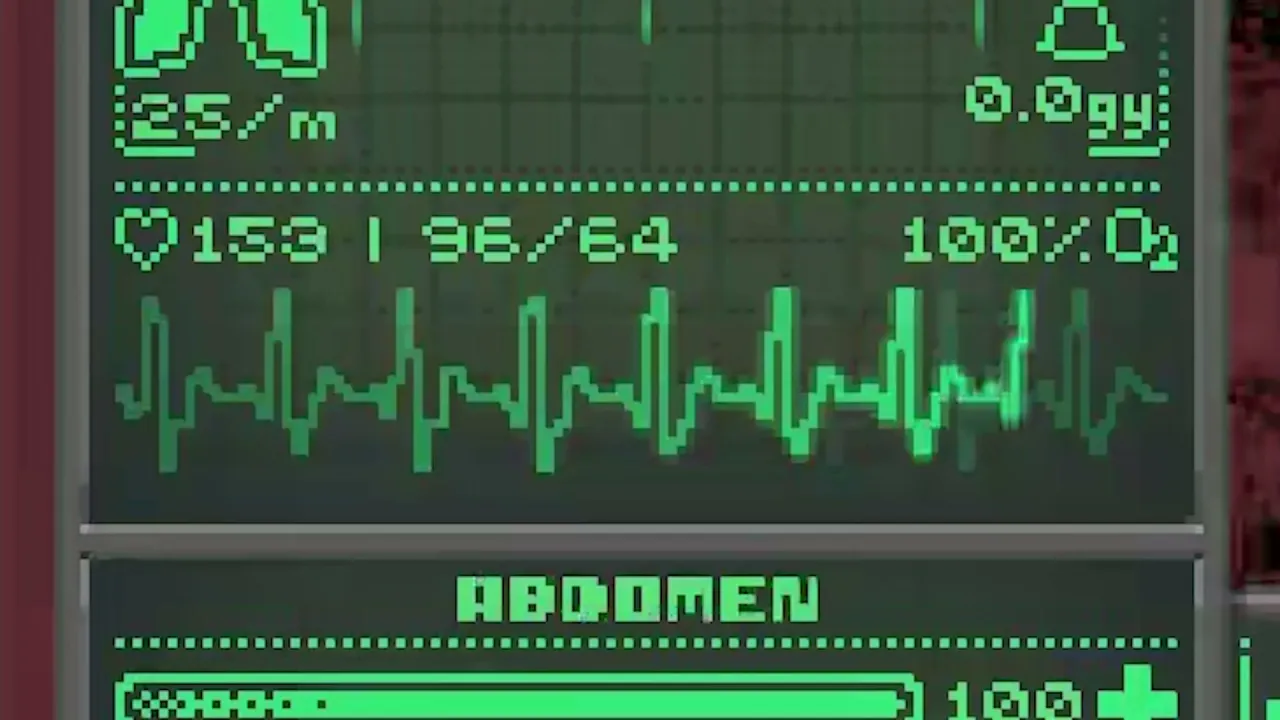
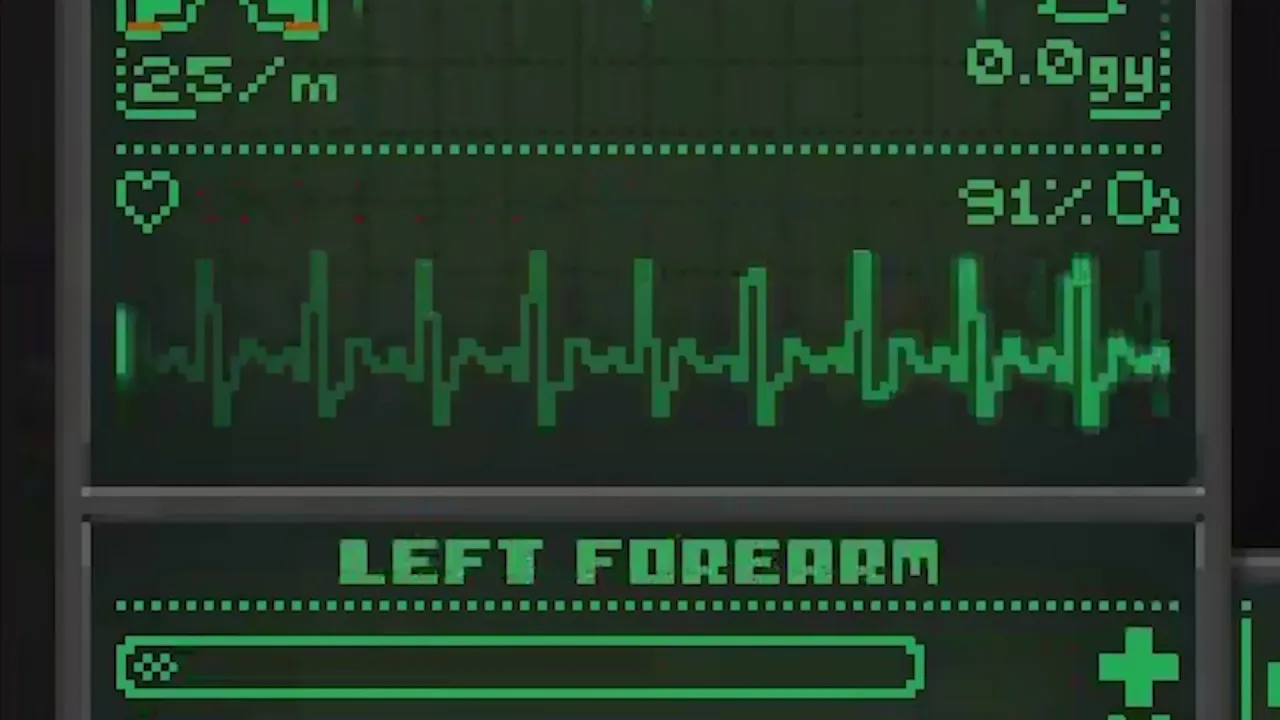
Fibrillation is a progressive heart-rhythm fault displayed on the ECG in the vitals monitor; community references say it pushes heart rate erratically until cardiac arrest at 100% progress. The first-party store text only promises a fully simulated cardiovascular system—it does not name fibrillation—so treat the moodle names and numeric rates below as community-reported, and trust your own in-game monitor over this page if they differ.
Arrhythmia moodles in community docs gate at rough progress bands (arrhythmia → ventricular tachycardia → ventricular fibrillation). When you see those chips, pause looting and execute circulation first aid from bleeding.
What should you do before grabbing a defibrillator?
Stabilize prerequisites so shocks are not wasted:
- Stop major bleeding — Community blood-pressure tables link hemorrhagic shock to fibrillation onset below certain pressures (community-reported). Use the bleeding checklist.
- Read heart rate and SpO₂ — Trailer UI places oxygen beside pressure. Community hypoxemia moodles warn that very low blood oxygen can contribute to arrhythmia (community-reported).
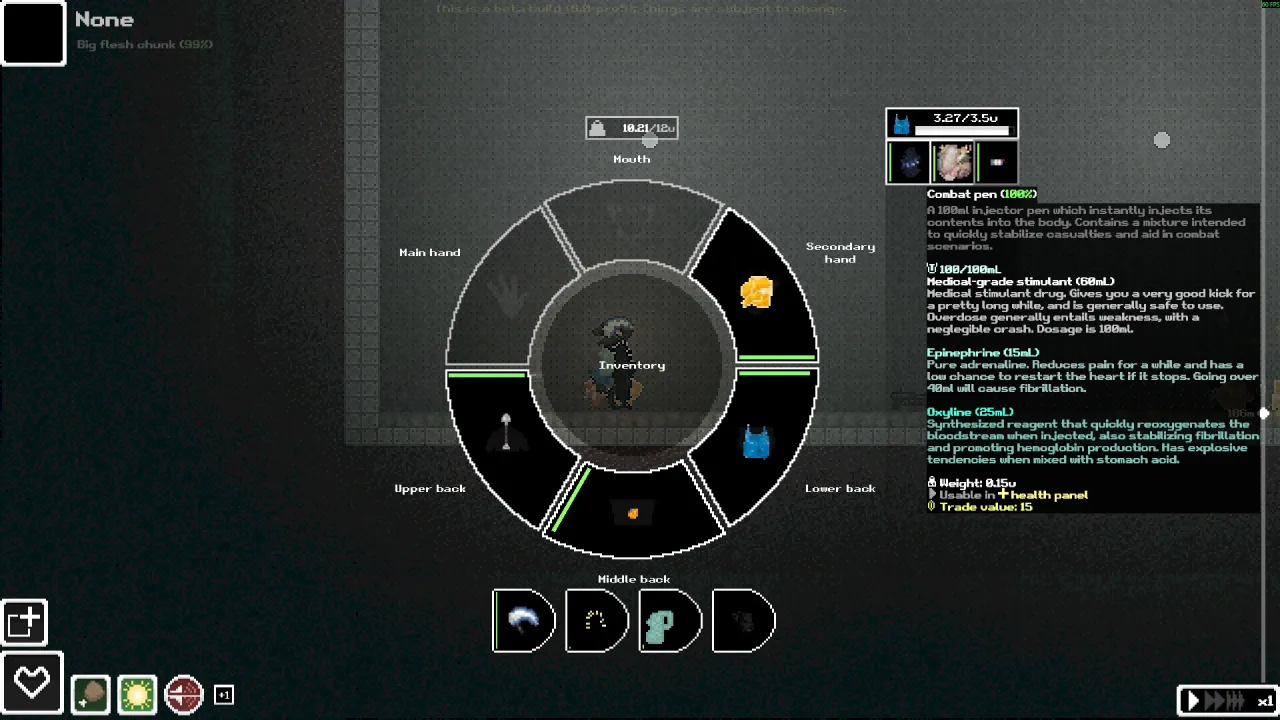
- Reduce stimulant spam — Beta inventory text for the Combat pen (screenshot from beta 6.8-pre5, not guaranteed for 1.0) lists epinephrine with a note that more than 40 mL can cause fibrillation, while Oxyline stabilizes fibrillation and supports oxygenation. Do not dump a full pen blindly during a fight.
- Only then shock or drug — Defibrillators and injectable anti-arrhythmics are second-line tools once pressure and volume are no longer collapsing.
How do defibrillators and drugs differ?
| Tool | Community-reported role | Risk profile |
|---|---|---|
| Automatic defibrillator | Resets fibrillation progress; can attempt arrest restart | Shock failure chances during arrest |
| Manual defibrillator | Same family; community notes say precision settings are not required for success | Battery/time cost on failed shocks |
| Oxyline (injectable) | Stabilizes fibrillation in beta tooltip; wiki cites −1.2/s progress | Mixing hazards with stomach acid in beta tooltip—beta UI only |
| Amiodarone (injectable) | Wiki cites −2/s fibrillation progress | Requires sourced injector, not starter bandages |
| Epinephrine | Restarts arrested heart with low per-mL proc chance in wiki | >40 mL epinephrine → fibrillation per beta Combat pen label |
Community fibrillation notes add that progress naturally decays when stressors stop (~0.75/s baseline, community-reported) but accelerates at extreme heart rates. Pair passive recovery with fixing the underlying bleed or heat issue—not only repeating shocks.
For item locations, see crafting recipes and loot tables in layer guides such as Gravel Lands; specific spawn lists remain community-reported.
How does fibrillation tie into the wider medical loop?
- Order — Follow the hub medical guide: circulation before rhythm before infection before broken bones.
- Consciousness — Store copy warns about losing consciousness; cardiac arrest moodles in community docs imply near-instant collapse without auxiliary perfusion gear (community-reported Auto-pump references).
- Mood / traits — Panic and trait load affect how long you can perform injection minigames under pressure.
Injection scenes in trailers depict a syringe minigame on limbs—the same interaction channel as Combat pen use (“Usable in health panel” per beta tooltip). Slow, deliberate doses beat panic dumping epinephrine.
What mistakes turn a recoverable arrhythmia into a run end?
- Shocking while still hemorrhaging, keeping pressure untreatably low (community-reported fibrillation start thresholds).
- Stacking epinephrine after beta-label warnings about the 40 mL fibrillation trigger.
- Ignoring Oxyline or defibrillator timing because DPS windows feel urgent.
- Treating rhythm issues as infection — purple limb pus belongs in the infection guide, not here.
If you need platform stability for reactive inputs during these minigames, confirm specs via system requirements. Story-motivated risk-takers should still read endings guide separately.
Sources checked
- https://store.steampowered.com/app/4576490/Casualties_Unknown/ (cardiovascular simulation feature)
- https://casualtiesunknown.miraheze.org/wiki/Heart (fibrillation, defibrillators, epinephrine — community-reported)
- https://casualtiesunknown.miraheze.org/wiki/Combat_pen (pen mixture effects — community-reported)
- Official Steam screenshot of the Combat pen tooltip, beta build 6.8-pre5 (Epinephrine over 40 mL causes fibrillation; Oxyline stabilizes it), 2026-11-10
Last checked 2026-11-10 against the sources above, game version 1.0.
Screenshots and trailer frames: official Steam store page and trailers, © Orsoniks / Oro Interactive.
FAQ
Does the game simulate heart rate and blood pressure?
What do defibrillators do?
What does Oxyline do according to beta UI text?
Can epinephrine cause fibrillation?
Where is fibrillation visible?
Related Articles
guides
Casualties: Unknown Beginner Guide — Walkthrough & Controls
First-run priorities for Casualties: Unknown: tutorial, survival order, default controls from in-game training, and common mistakes to avoid.
guides
Console Commands — Sandbox, Cheats & How to Open the Console
Open the developer console with the backtick key, use the Training Sandbox, and see which commands are corroborated on two sources—type help for the live list.
guides
All Endings in Casualties: Unknown — Bio-pod, Escape, Mercenary
Casualties: Unknown has three endings on a full run: Bio-pod, Escape, and Mercenary. How they branch after layer 10 cargo and layer 11 ascent.
Was this helpful?
Thanks for the feedback!