Medical Triage · 1.0
Broken Bones Guide — Fractures, Splints & Recovery
Handle broken bones and dislocations in Casualties: Unknown: reading heal timers, splints, bandages, bone welding trade-offs, and when fractures block combat.
How do you recognize a broken bone or dislocation?
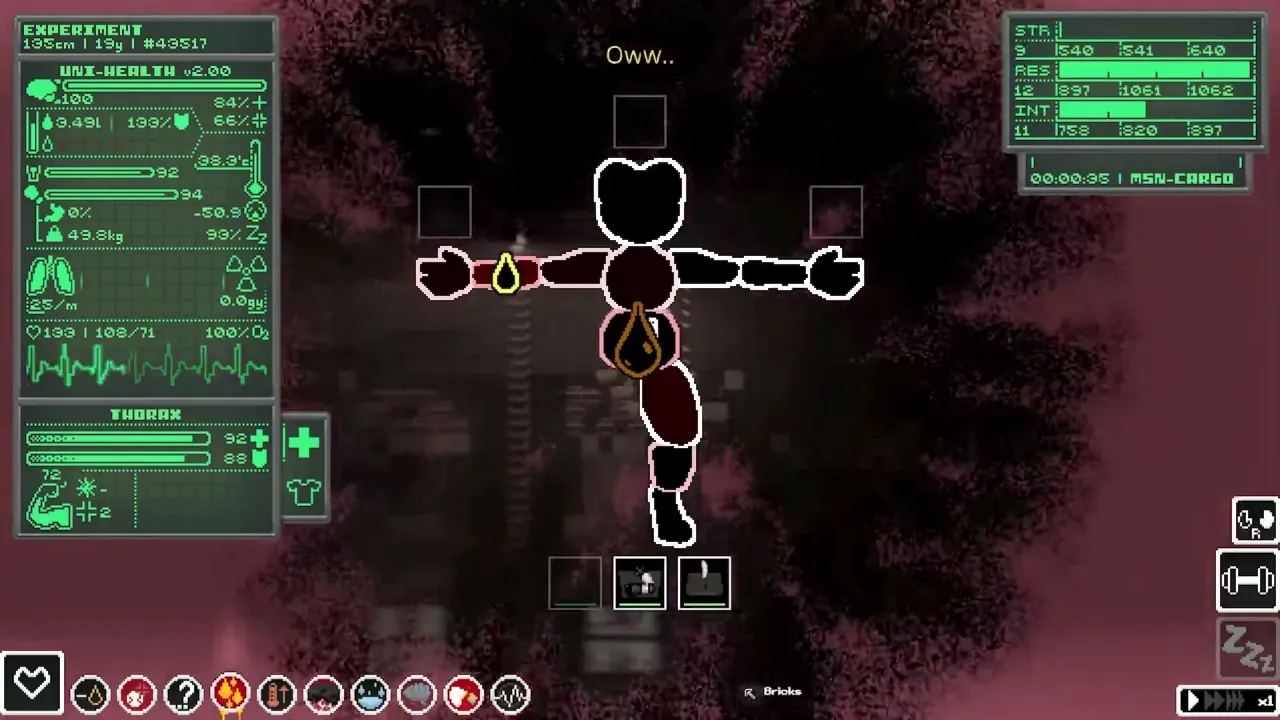
Open the health panel limb view for fracture or dislocation moodles, heal timers, and forced-zero grip on hands or jaws. Community references checked on 2026-11-10 separate dislocated joints (shorter timers, minigame reduction) from fractures (longer clocks, heavier penalties). Official marketing confirms limb-level simulation but not these labels—treat moodles as authoritative, numbers below as community-reported.
Impacts from falls, traps, explosives, and certain enemies appear in community cause tables; armor may reduce proc chances (community-reported).
What should you do immediately after a fracture?
Use late triage from the medical guide—bones are rarely step one:
- Scan for bleeding — Community fracture entries add bleed and internal bleed, especially on rib or neck hits. Run bleeding steps before splinting.
- Check the vitals monitor — Pain and adrenaline spikes from breaks can stress the heart; see fibrillation if the ECG destabilizes.
- Stop using the limb — Community effects zero out force on fractured hands or jaws, blocking inventory slots and melee swings until healed.
- Apply a splint or dressing when safe — Splints accelerate timers; dressings shave minutes off waits per community notes.
- Rest or extract — Continuing sprint combat applies per-second pain on fractured legs (community-reported).
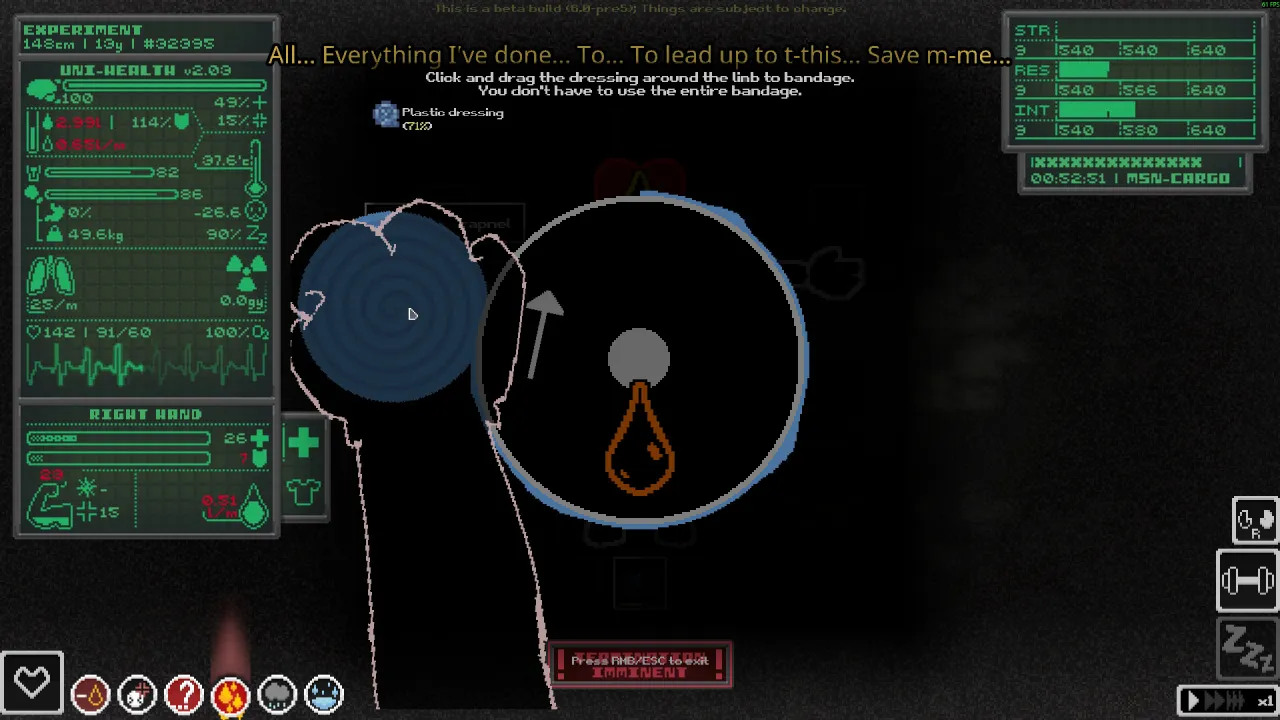
Dressings here mirror the bleeding minigame: partial wraps still help. Community guidance claims a full basic roll can shave roughly seven minutes off a fracture wait—community-reported, not first-party.
Which treatments exist for fractures and dislocations?
| Injury | Fast relief | Primary long fix | Community-reported timers |
|---|---|---|---|
| Dislocation | Alignment minigame with wrench | Splint halves remaining time | ~20–24 minute initial timer band |
| Fracture | Splint (~2.5× heal speed) | Wait ~39 minutes or bone welding (−75% time) | Welding has viscosity side effects per blood wiki |
| Neck / spine | Same splint family | Avoid jumps; movement −30% | Severe moodles |
Dislocation minigames—described in community docs—let you knock the bone toward an outline with mouse momentum; high pain pauses the minigame unless opiates numb it (community-reported). Finishing early when the timer is almost done is possible in community notes.
Bone welding appears in community blood viscosity tables as a sudden +viscosity bump—pair with circulation monitoring if you choose that shortcut.
How do fractures interact with infection and exploration?
- Skin damage — Community fracture events apply substantial skin health loss, which raises future infection rolls if you wander dirty caves untreated.
- Mobility — Leg fractures increase jump pain and cap run speed; dislocated spines or necks impose movement penalties that make layer retreats harder.
- Crafting dependency — Splints and advanced kits come from the same crafting ecosystem as sterile dressings (crafting recipes). Stock parts before entering Deeper Gravel Lands or harsher biomes.
Returning survivors should align pacing with the beginner guide so you do not burn food while waiting out a 30-minute bone clock mid-run.
What mistakes make fractures lethal indirectly?
- Fighting through a broken leg — community pain-per-second while sprinting drains mood and risks heart strain.
- Skipping splints because “time will fix it” — timers are long enough for starvation or night cycles to bite.
- Using dislocation minigames without pain control — community pause events stall healing in combat.
- Ignoring secondary bleeding — internal bleed from torso fractures stacks quietly (community-reported).
Fractures seldom end runs instantly; they lose runs by blocking evasion while other systems (bleeding, fibrillation) fail in the background.
Sources checked
- https://store.steampowered.com/app/4576490/Casualties_Unknown/ (limb damage simulation, bandaging)
- https://casualtiesunknown.miraheze.org/wiki/Bone_Injuries (fractures, dislocations, splints — community-reported)
- https://casualtiesunknown.miraheze.org/wiki/Blood_(mechanic) (bone welding viscosity effect — community-reported)
- Official Steam screenshots, beta build 6.8-pre5 (health panel and bandaging minigame text), 2026-11-10
Last checked 2026-11-10 against the sources above, game version 1.0.
Screenshots and trailer frames: official Steam store page and trailers, © Orsoniks / Oro Interactive.
FAQ
Does the official Steam page mention fractures?
What is the difference between dislocation and fracture?
How do splints help?
Can broken ribs affect breathing?
Do fractures cause bleeding?
Related Articles
guides
Casualties: Unknown Beginner Guide — Walkthrough & Controls
First-run priorities for Casualties: Unknown: tutorial, survival order, default controls from in-game training, and common mistakes to avoid.
guides
Console Commands — Sandbox, Cheats & How to Open the Console
Open the developer console with the backtick key, use the Training Sandbox, and see which commands are corroborated on two sources—type help for the live list.
guides
All Endings in Casualties: Unknown — Bio-pod, Escape, Mercenary
Casualties: Unknown has three endings on a full run: Bio-pod, Escape, and Mercenary. How they branch after layer 10 cargo and layer 11 ascent.
Was this helpful?
Thanks for the feedback!